
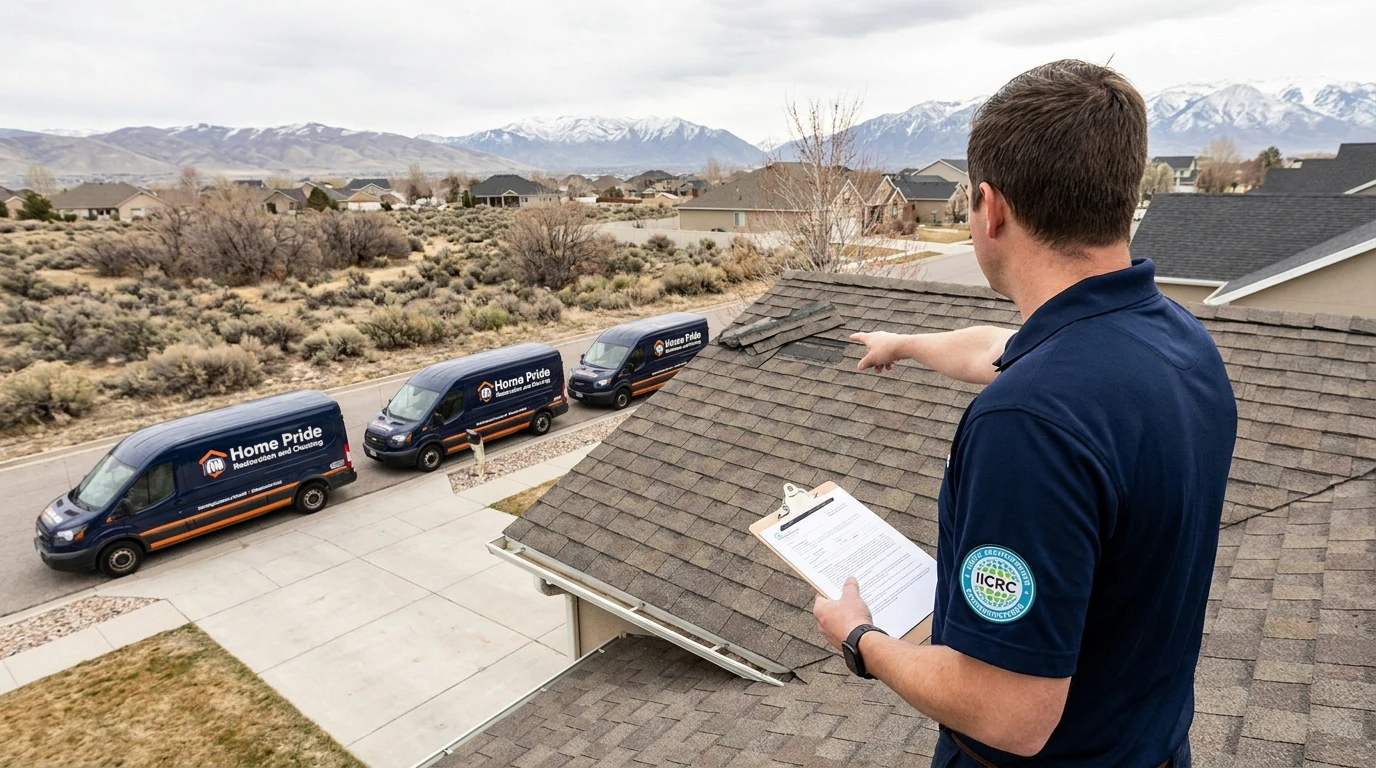
TL;DR: Yes, most standard homeowners insurance policies cover wind damage. That includes damage to your roof, siding, windows, and attached structures like garages. Fences are usually covered too, though at a lower limit. The key exceptions are cosmetic-only damage, pre-existing wear, and policies with separate wind or hail deductibles. Document everything before any repairs begin, and get a written scope from your restoration contractor before signing anything.
If a windstorm just tore shingles off your roof or knocked a fence panel into your yard, you are probably wondering whether your policy will pay for it. The short answer is yes for most homeowners, but the details matter. Wasatch Front canyon winds, which can gust past 80 mph through the Traverse Range and down into communities like Lehi, Eagle Mountain, and Saratoga Springs, cause a specific pattern of damage: lifted shingles, cracked ridge caps, blown-off soffits, and fence sections that act like sails. This post covers exactly what a standard policy pays for, what it excludes, and how to protect your claim from the start.
Does homeowners insurance cover wind damage to a roof?
Standard homeowners insurance covers sudden wind damage to a roof, including missing or lifted shingles, damaged flashing, cracked ridge caps, and wind-driven rain that enters through a new opening. Coverage applies when the damage is caused by a specific storm event, not by years of wear.
The coverage lives in the “dwelling” section of your policy (Coverage A). If a gust lifts shingles and rain soaks your attic insulation, both the roof repair and the resulting interior water damage are typically covered under the same claim. The insurer will want proof that the entry point was wind-created, not a pre-existing gap, which is why documenting the damage immediately after the storm matters so much.
A few things that can complicate a roof claim:
- Age and condition: If your roof was already at the end of its useful life, the insurer may apply depreciation and pay only actual cash value (ACV) rather than replacement cost value (RCV). Check your policy declarations page for which applies.
- Cosmetic damage: Some policies exclude cosmetic damage, meaning dented but functional metal roofing or scuffed shingles that still shed water. Utah’s Insurance Department has guidance on what insurers can and cannot exclude under state rules.
- Separate wind/hail deductibles: In high-wind regions, some policies carry a separate deductible for wind and hail claims, often 1-2% of the dwelling’s insured value rather than a flat dollar amount. Read your declarations page before assuming your standard deductible applies.
For a roof that is actively leaking after a storm, the first priority is stopping further water intrusion. Emergency tarping qualifies as a reasonable protective measure and is reimbursable under most policies. Keep every receipt.
Is wind damage to a fence covered by homeowners insurance?
Wind damage to a fence is typically covered under the “other structures” section of a homeowners policy (Coverage B), which usually pays up to 10% of your dwelling coverage limit. A home insured for $400,000 would have up to $40,000 available for fences, detached garages, and similar structures.
That 10% limit is enough for most fence repairs, but there are two common friction points:
- Pre-existing rot or damage: If the fence was already leaning or the posts were rotting, the insurer may argue the wind finished off a structure that was already failing. Photos taken before storm season are your best defense.
- Matching: If only a section of a fence is damaged, some insurers will pay only for that section, leaving you with mismatched panels. Utah does not have a universal matching statute for fences the way some states do for roofing, so this is worth clarifying with your adjuster before repairs begin.
Vinyl and aluminum fences tend to fail in large sections during high-wind events, while wood fences often lose individual panels. Either way, photograph the damage from multiple angles, including the base of any downed posts, before you clear debris.
What wind damage does homeowners insurance NOT cover?
Several categories of wind-related damage are commonly excluded or disputed:
- Flood from wind-driven storm surge: If wind pushes water into your home from the ground up (flooding), that is a flood claim, not a wind claim. Standard homeowners policies exclude flood. This matters less in Utah than in coastal states, but it applies to any ground-level water intrusion.
- Vehicles: A tree blown onto your car is covered under your auto policy’s comprehensive coverage, not your homeowners policy.
- Detached structures used for business: A detached workshop or rental unit may have limited or no coverage under Coverage B depending on your policy language.
- Gradual damage: Shingles that have been lifting and reseating through multiple wind events over years are not a sudden loss. Insurers look at the damage pattern to distinguish a single storm event from cumulative wear.
- Negligent maintenance: If a tree on your property was visibly dead or diseased and fell on a neighbor’s fence, your liability coverage may be in play, but your neighbor’s insurer may subrogate against you.
The Insurance Information Institute maintains a plain-language breakdown of what standard HO-3 policies cover and exclude, which is worth reading before you call your agent.
How do you document a wind damage claim correctly?
Proper documentation is the single biggest factor in whether a wind damage claim pays out quickly or drags on for months. Start before you call your insurer.
Step 1: Photograph everything immediately. Wide shots of the property, close-ups of every damaged area, and photos of the surrounding context (downed branches, neighbor damage, debris field) establish that a real storm event occurred. Timestamp metadata on phone photos is useful evidence.
Step 2: Do not make permanent repairs before the adjuster inspects. You can and should take emergency protective measures, like tarping an open roof section or boarding a broken window, but do not replace shingles or rebuild a fence before the adjuster documents the damage. Keep all damaged materials on-site until told otherwise.
Step 3: Get a written scope of work from your restoration contractor before signing anything. The scope should itemize every damaged component, the repair method, and the cost. This gives you something to compare against the adjuster’s estimate. If the numbers differ significantly, a public adjuster or your contractor can help you negotiate.
Step 4: File promptly. Most policies require you to report a loss “promptly” or within a specific window (often 60-365 days depending on the carrier). Waiting too long can give the insurer grounds to deny the claim.
Our post on the storm damage insurance claim checklist walks through each step in more detail, including what to say on the first call with your insurer.
What should you do right now if wind damaged your home?
If you have active damage, the priority order is: protect the structure, document the damage, then call your insurer.
For roof damage, that means getting a tarp over any open sections before the next rain. Utah’s late-summer monsoon pattern and early-fall storm season mean a damaged roof can become a water damage claim within days. Emergency board-up and tarping services exist specifically for this window between the storm and the adjuster’s visit.
For fence damage, secure any sections that could fall onto a vehicle, a neighbor’s property, or a public right-of-way. Document the damage first, then make it safe.
Once the structure is protected and the damage is documented, call your insurer to open the claim. Ask specifically:
- Does my policy have a separate wind or hail deductible?
- Is my roof covered at replacement cost value or actual cash value?
- What is my Coverage B limit for other structures?
If you need a contractor to assess the damage, document it for your insurer, and handle the restoration work, Home Pride Restoration and Cleaning LLC serves the Wasatch Front and Utah Valley, including Saratoga Springs, Lehi, Eagle Mountain, and surrounding communities. They handle storm damage restoration and roof leak repair and can provide the written scope your insurer will need. Reach them at (801) 995-2437, available 24/7.
For more on what storm-related policies typically cover beyond wind, see our guide on does homeowners insurance cover storm damage.
About Home Pride Restoration and Cleaning
Home Pride Restoration and Cleaning is an IICRC-certified restoration company serving Saratoga Springs, Lehi, Eagle Mountain, American Fork, Orem, Provo, and surrounding Utah communities since 1997 (license RC-25-0737). Their crews handle storm damage restoration, roof leak repair, water damage restoration, mold remediation, fire and smoke damage restoration, and a full range of residential and commercial restoration services across the Wasatch Front and Utah Valley.